Leta i den här bloggen

onsdag 25 januari 2023

KHERSON -alueen juutalaisväestön historiasta

 https://www.jewishvirtuallibrary.org/kherson

SITAATTI linkin antamista tiedoista: (2008 )


KHERSON, city in Nikolayev district, Ukraine. The town was founded in 1778 and Jews began to settle there a few years later. In 1799 there were 39 Jewish merchants in Kherson and 180 Jewish townsmen. A Jewish hospital was built in 1827. Like other communities in New Russia, that of Kherson grew rapidly during the 19th century, as a result of the settlement of the whole area by Jewish emigrants who left the northwestern provinces of the *Pale of Settlement for the southern provinces which were developing in this period. The number of Jews increased from 3,832 in 1847 to 17,755 (30% of the total) in 1897. Jews played an important role in the development of the town, and in 1862 the governor of Kherson province even recommended that one of the Jewish merchants be elected mayor, claiming that there were no suitable Christian candidates. He added that since many of the Jewish merchants owned properties and were educated, the election of one of them to the mayoralty would result in tangible benefits to the town. Although also supported by the governor-general of New Russia, this recommendation was not approved. In 1884, of 150 merchants, 73 were Jews; 8 factories out of 53 and 55 shops out of 123 belonged to them. At the end of the 19th century, Kherson became an active center of Zionism: the Biluists Ya'akov Shertok and Ze'ev Smilansky were then active. When Eliezer Paper was appointed director of the talmud torah in 1896, he introduced the " Ivrit-be-Ivrit " method, teaching Hebrew through the medium of Hebrew. Jewish pupils constituted a majority in the secondary schools. From the beginning of the 20th century there operated a mutual fund bank for petty merchants and artisans. In 1909 it had 1,093 members and a capital of 13,880 rubles. The Jews of Kherson suffered during the pogroms which swept the Ukraine in 1905 and during the civil war. *Denikin's soldiers carried out pogroms in April 1919. In the beginning of the Soviet regime, in the years 1921–22, there was great hunger, and many died of starvation (in December 1921, 39; in February 1922, 189). In the 1920s there was a court of law in which proceedings were held in Yiddish, and a Jewish elementary school with an enrollment of 220 in 1925, out of 1,200 children of school age. There were also an industrial school and Jewish departments in the local university. An underground Chabad yeshivah existed at the beginning of the 1930s. Early in the 1930s many Jews worked in factories, and in the biggest – the Petrovski plant – there were 1,500 Jews out of 4,500 workers. There were 14,837 Jews (19% of the total population) in the town in 1926, and 16,145 (of a total population of 96,988) in 1939. The Germans occupied Kherson on August 19, 1941. On August 29 they killed 100 Jews and in early September, 110. On September 7, a ghetto was established, and a Judenrat and Jewish police were organized. On September 24–25 Einsatzkommando 11a murdered 8,000 Jews. Later Jews found hiding were executed, and in February 1942 some 400 children of mixed marriages were killed. In 1959, there were 9,500 Jews (6% of the total population) living in Kherson. The last synagogue was closed by the authorities in 1959 but was returned to the community in 1991 as Jewish life revived despite the emigration of most of the Jews.

Province of Kherson

The province (gubernia) of Kherson was until the 1917 Revolution among the provinces of New Russia, and during the 19th century one of the main areas attracting Jews from other parts of Russia. The number of Jews in the province grew from 11,870 in 1818 to 339,910 in 1897, one of the highest rates of increase in the Pale of Settlement. The majority of the Jews lived in the towns: 70.89% in 1897, as against 10.18% in the townlets and 18.93% in the villages. A considerable part of the Jewish population was concentrated in the large urban centers, especially *Odessa. Other large communities at the end of the 19th century were Yelizavetgrad (*Kirovograd), *Nikolayev, and Kherson. The province of Kherson was the principal center for government-sponsored Jewish agricultural settlement in Russia, and the largest relative concentration of Jewish farmers in the country was found there (7.15% of the Jewish population of the province in 1897). From the economic point of view, the Jews of the Kherson province were among the wealthiest and most stable in the Pale of Settlement. Like the Jews of the other southern provinces of Russia, those of Kherson were mainly engaged in commerce (41.36% in 1897), particularly trading in grain and other agricultural products; 20.52% of the Jews of the region earned their livelihood from this trade in 1897. General education and modification in the traditional way of life made greater progress among the Jews of Kherson province than in the other regions of the Pale of Settlement; 45.1% of the Jewish men and 24.6% of the Jewish women in the province were able to read Russian in 1897. After the 1917 Revolution, the province was divided up into several separate administrative units.

 Toinen linkki, jossa Kersonin kuvernaatin juutalaiset kylät maintaan ja  västeönlaskenta vuodelta 1897.

https://jewua.org/shtetls-of-kherson-gubernia/

'

lördag 7 maj 2022

BUKOVINA: Osa on nyky-Ukrainaa.

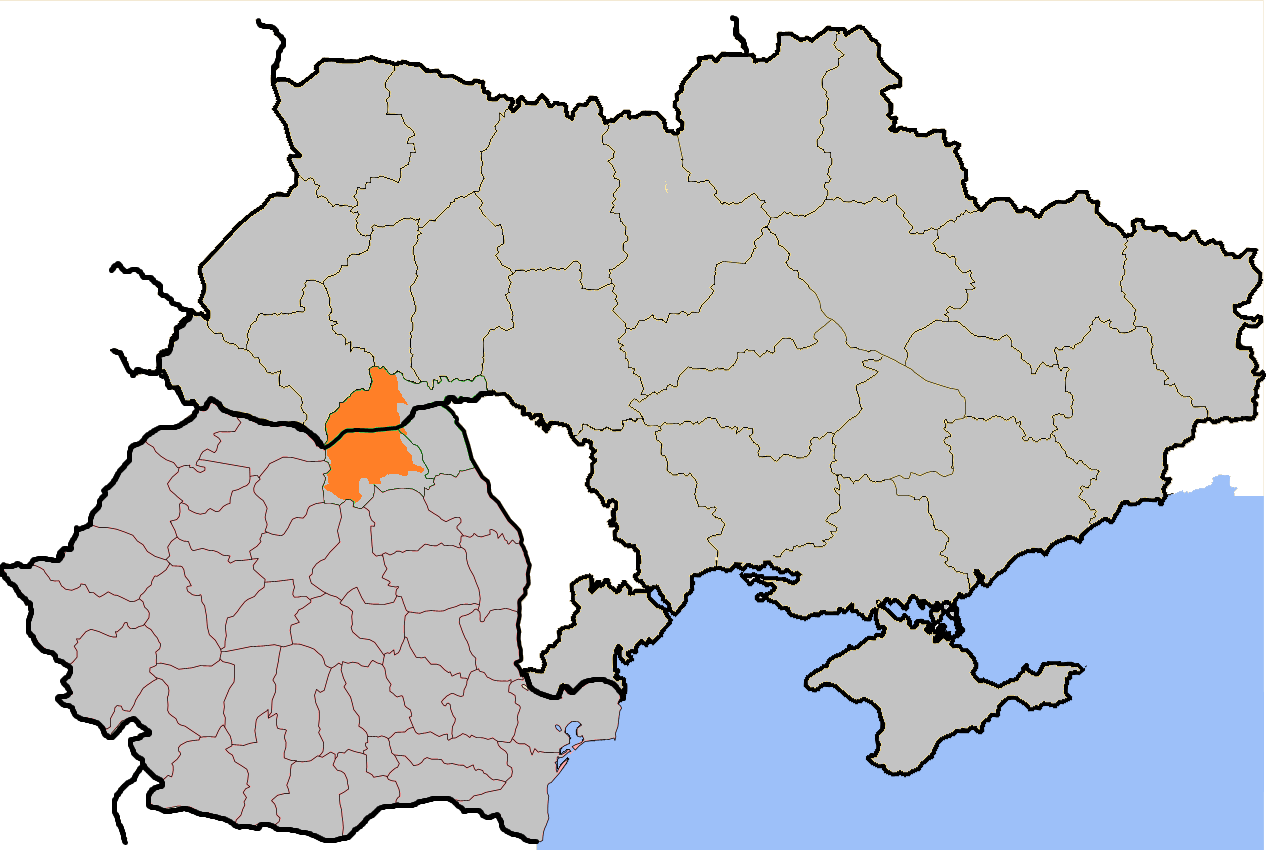
Location of Bukovina within northern Romania and neighbouring Ukraine Ukraine in the interwar period In the aftermath of World War I and the revolutionary upheavals that followed, Ukrainian territories were divided among four states. Bukovina was annexed to Romania. Transcarpathia was joined to the new country of Czechoslovakia. Poland incorporated Galicia and western Volhynia, together with smaller adjacent areas in the northwest. The lands east of the Polish border constituted Soviet Ukraine.

Bessarabia, mihin kohtaan se asettuu?

 https://carnegieeurope.eu/2018/05/24/bessarabia-s-hopes-and-fears-on-ukraine-s-edge-pub-76445

Puna-armeijan voiton linja vuonna 1944 toukokuun alkuun mennessä

 Toukokuun 1944 alkuun mennessä venäläisten offensiivi päättyi kaikilla hyökkäyslinjoilla rintamalinjan kulkiessa nyt suunnassa Narva-Pihkova-Vitebsk-Zlobin-Kovel-Brody-Cernauti-Zernowits- Pascani-Jassy-Tiraspol-Odessa. Tämä offensiivi oli suoritettu suunnitelmien mukaan ainakin sikäli, että Ukraina oli otettu pois saksalaisislta ja varmistus työnnetty etelässä Puolaan ja Romaniaan. Mutta offensiivi oli tullut molemmille puolille tavattoman kalliiksi. taiostgeluja oli käyty uskomattomalla sitkeydellä, sitä todistavat varsinkin saartorenkaissa kaatuneitten saksalaisten lukumäärät sotavangeiksi otettuihin verrattuna.

Kesäkuussa (1944 tilanteedsta)  venlääiset arvioiva kaksi vuotta kestäneen taistelun voittoja ja tappioita seuraaviin lukuihin:
Kaatuneita ja vankeja: 
saksalaisia 6,400 000
Venäläisiä 4,200 000
Tykkejä: saksalaisia: 56 500 kpl,
venäläisiä 35 000 kpl.
Panssarivaunuja :
 saksalaisia 43 000 kpl
venäläisiä:60 000 kpl
Lentokoneita :
 saksalaisia 43 000 kpl
venäläisiä 23 000 kpl.
saksalaisten samanaikaisesti antamissa numerotiedoissa mainitaan  venäläisten menettäneen yhtensä 12 700 000 miestä kaatuneina ja 5 700 000 miestä sotavankeina. Omiksi tappioikseen saksalaiset ilmoittivat kaatuneina, haavoittuneina ja vankeina 5 000 000. 
Näin kertoo  pauli Huhtala 1948 painetussa kirjassa, joka kuvaa rintamaliikkeitä maailmansodan aikana.

Mitä oli tapahtunut   tuon rintamien mainitsemien kylien juutalaisväestöille? Katson jos netistä löytyy dokumenttia. 
 
Jassy on nykyRomanian koillisosassa. Se toimi I maailmansodan aikana Romanian pääkaupunkina, kun Bukarest oli miehitettynä.
 
https://fi.wikipedia.org/wiki/Ia%C8%99i   Iasi ( Jassy):
 Vielä 1800-luvun puoliväliin asti kaupungin väestöstä oli jopa kolmannes juutalaisia. Kaupungissa ilmestyi peräti jiddišinkielinen sanomalehti ja toimi jiddišinkielinen ammattilaisteatteri. Iașin pogromissa 29. kesäkuuta – 6. heinäkuuta 1941 tai sen jälkeen surmattiin puolet juutalaisista ja loput kuljettiin pois. 
 Muun kielisillä Wikipedia teksteillä  asiasta saa enemmänkin tietoa, muta tässä on linkki popgromiin, joka oli 27-29.9. 1941 ja se tapahtui Antonescun päivinä. Oman sodanjälkeisen väestölaskentansa mukaan juutalaisväestö ilmoitti uhreja olleen peräti 14 850.[1]

Entä Tiraspol?
 https://en.wikipedia.org/wiki/Tiraspol.  Saksalaisokkupaation aikana  Tiraspol oli romanialaisten hallinnosa ja miltei koko juutalaisväestö katosi, osa surmattiin, osa kuljetettiin  kuolemanleireille.
Konfliktialue edelleen ja nyt Ukrainan invaason aikana  Venäjä on pommittanut  Tiraspolia. Sen itsenäisyystoimi ei hyväksytty aikanaan kansainvälisesti. (PRM) 
Tässä mainitaan mm Odessasta.
 
Bessarabian alueen määrittely : tästä otan linkin  erikseen, koska se alue nyt on usean eri valtion aluetta.  Ukrainalla on sitä osa: mm.  odessan lääniä- ja Izmailian aluetta. 
 https://carnegieeurope.eu/2018/05/24/bessarabia-s-hopes-and-fears-on-ukraine-s-edge-pub-76445

Stavropol Holokaustin aikana: Juutalaisten Lääkärien ja pakolaisten kohtalosta

 https://pubmed.ncbi.nlm.nih.gov/32307967/

Review
. 2020 Apr;159(4):273-277.

[THE FATE OF THE JEWISH STAFF OF THE MEDICAL INSTITUTE IN THE CITY OF STAVROPOL DURING THE HOLOCAUST]

[Article in Hebrew]
Affiliations
  • PMID: 32307967

Abstract

In the first two decades of the 21st century, research on the history of Jewish medicine during the Holocaust expanded. Studies were written on the medical activity in German-occupied areas, particularly the large and medium-sized ghettos in Poland, Lithuania, and Czechoslovakia, in addition to Holland, Hungary, and Germany, and Jewish physicians' activity in the camps. Conspicuously absent is the study of Soviet Jewish medicine and physicians in areas occupied by the Germans in World War II with the German offensive against the Soviet Union, which began on 22 June 1941. This article sheds light on the fate of 36 Jewish physicians and scientists from Stavropol Medical Institute in the North Caucasus during the Holocaust-renowned professors, lecturers in all branches of medicine, of which one third were women of outstanding medical achievements. The description draws on writings by researchers from the Commonwealth, including Stavropol, witness testimonies collected by the Soviet Extraordinary State Commission to investigate Nazi atrocities (1943-1945), and the memoirs of Ludmila Schwartzman, daughter-in-law of Prof. Jacob Schwartzman, renowned cardiologist before the war and senior Medical Institute physician murdered with the rest. The article describes the history of Caucasian Jews and thousands of Jewish refugees who sought shelter in the area, focusing on Stavropol's Jews, including numerous Medical Institute teachers, researchers and their families, either shot to death in forests outside the city or killed in gas vans. Research of the history of Stavropol Medical Institute's Jewish staff both memorializes the Jewish physicians and scientists and opens a window into Jewish physicians' activity in Nazi-occupied Soviet regions. This is a research area in its infancy warranting deeper investigation.


onsdag 6 april 2022

Suomen uutisia Hesarista tänään.

Lehti: Yandexin Venäjän-toimitus­johtaja muutti Israeliin

Israelilaisen Haaretz-lehden lähteiden mukaan toimitusjohtaja Elena Bunina on ei aio palata Venäjälle.

It-yhtiö Yandexin toimitusjohtaja Elena Bunina.

15:41

Venäläisen hakukoneyhtiö Yandexin Venäjän-yhtiön toimitusjohtaja Elena Bunina on muuttanut Venäjältä Israeliin, kertoo israelilainen Haaretz-lehti.

Haaretzin nimettömien lähteiden mukaan Bunina on ollut Israelissa kuukauden, eikä aio palata Venäjälle. Hän on uskonnoltaan juutalainen.

Yandexin Israelin-yhtiön tiedottaja ei halunnut kommentoida toimitusjohtajan sijaintipaikkaa Haaretzille.

Bunina on johtanut Yandexin operatiivisesta toiminnasta käytännössä vastaavaa Venäjän-yhtiötä vuodesta 2017. Yandexin emoyhtiö on rekisteröity Hollantiin ja listattu Nasdaq-pörssiin New Yorkissa.

Buninan kauden yhtiön toimitusjohtajana oli määrä päättyä 15. huhtikuuta.

Lauantaina Yandex kuitenkin tiedotti, että Bunina jättää tehtävänsä Yandexissa noin kaksi viikkoa sovittua aiemmin omasta tahdostaan.

Yandex ei kommentoinut asiaa uutistoimisto Reutersin mukaan sen enempää.

Lue lisää: Venäjän ”Googlesta” tuli kertaheitolla kriisiyhtiö ja propagandan tuuttaaja – Sotasensuuriin alistuvasta Yandexista karkaavat nyt sekä työntekijät että rahoittajat.

Haaretz kertoo, että venäläismedian mukaan Bunina oli lähtenyt Venäjältä Ukrainaan hyökkäyksen ja pakotteiden seurauksena.

Hän julkaisi hyökkäyksen jälkeen Facebookissa kirjoituksen, jossa hän sanoi olevansa ”verta ja sotaa” vastaan.

Sunnuntaina venäläinen verkkosivusto The Bell kertoi Buninan kirjoittaneen yhtiön sisäiselle keskustelupalstalle, että hän muutti pois Venäjältä, koska ei voi työskennellä maassa, joka on sodassa naapurimaidensa kanssa, Haaretz kertoo.

Yandexin Hollannin-emoyhtiön toimitusjohtaja Tigran Khudaverdyan jätti paikkansa maaliskuussa sen jälkeen, kun hänet lisättiin Euroopan unionin pakotelistalle.

Yandex-yhtiöön ei kohdistu talouspakotteita.

Yandexin yksi palvelinkeskus sijaitsee Mäntsälässä, ja sen kyytipalvelu toimii Suomessa Yango-nimellä.


måndag 28 mars 2022

Kiovan uutiset 28.3. 2022 klo 13:43

News Feed